
How observability, feedback loops, and automation principles map to leadership.
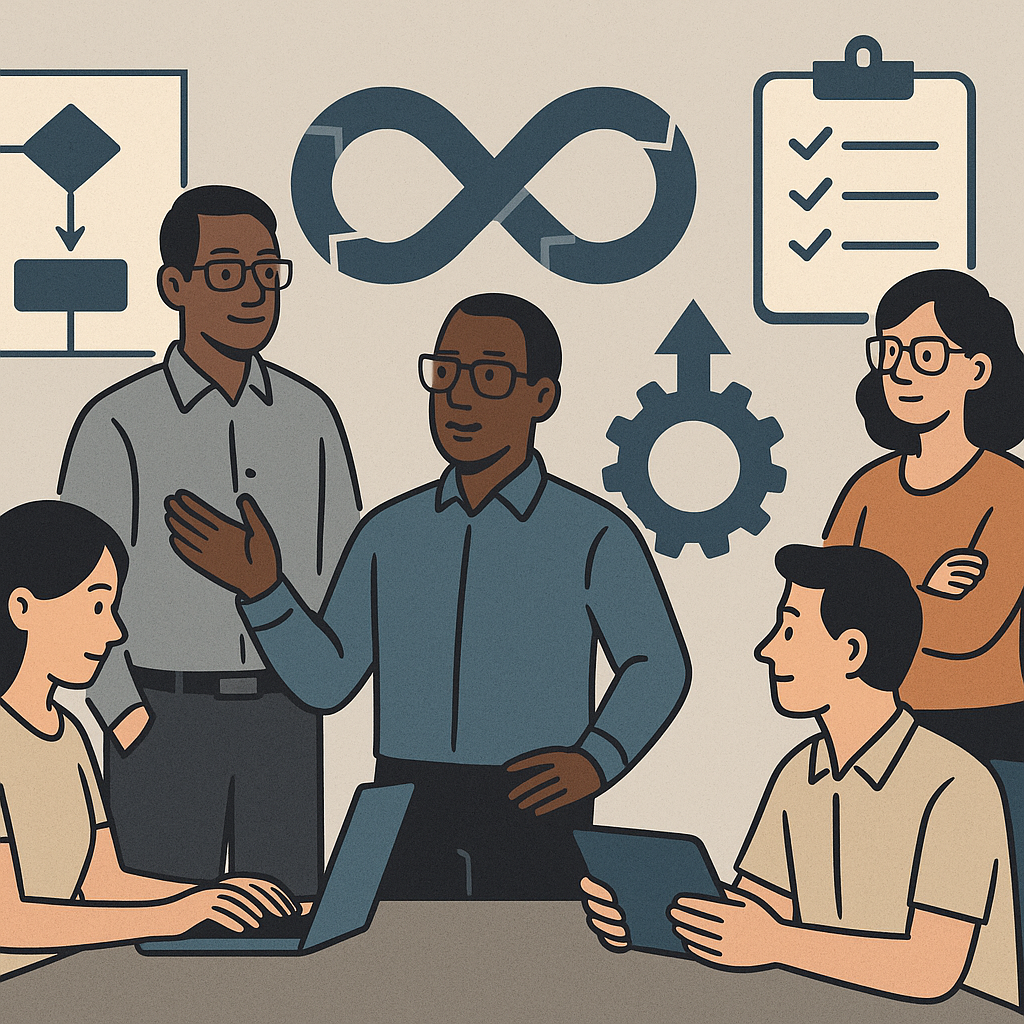
Engineering teams often treat DevOps as a purely technical discipline: deployments, pipelines, performance metrics, and operational tooling. But the deeper value of DevOps has always been cultural. The same principles that make systems stable and predictable also help teams collaborate, communicate, and grow.
At O’Side Systems, we’ve seen that DevOps thinking translates well to human systems. Leaders who understand these parallels create organizations where learning is continuous, ownership is shared, and improvement becomes a natural rhythm rather than a forced initiative.
Below are a few ways DevOps concepts map directly to leadership and team culture.
Observability: Seeing the Real Signals
In software, observability helps us understand what a system is doing without guesswork. Logs, metrics, and traces turn invisible behavior into something we can reason about.
Teams need the same kind of visibility.
Ways to build observability into human systems:
- Regular one-on-ones that surface concerns early
- Project dashboards that reduce manual reporting
- Retrospectives focused on learning
- Simple documentation capturing context and decisions
Observability is not surveillance. It is clarity. It helps leaders act early, thoughtfully, and without assumptions.
Feedback Loops: Shorter Is Better
DevOps thrives on tight feedback loops. Automated tests, incremental releases, and continuous integration keep the cost of learning low. When feedback arrives quickly, correction becomes easier.
Leadership works the same way.
Healthy teams use short, consistent feedback cycles:
- Quick design or code reviews
- Small experiments instead of large commitments
- Fast adjustments instead of late-stage surprises
Feedback becomes part of everyday work, not a quarterly event.
Automation: Reducing Cognitive Load
Automation eliminates repetitive tasks so people can focus on work that requires judgment and creativity.
Human systems benefit from the same idea.
Examples:
- Clear onboarding guides
- Reusable templates for planning or reviews
- Defined decision paths that reduce ambiguity
- Routines that remove unnecessary managerial intervention
Good automation in leadership is about removing friction so people can do deep, focused work.
Continuous Delivery: Progress Over Perfection
The essence of CI/CD is steady, incremental delivery. You do not wait for perfection. You ship improvements in manageable steps, validate them, and iterate.
Teams grow the same way.
Leaders who follow this mindset:
- Encourage learning through small attempts
- Allow people to try new approaches without fear
- Emphasize steady progress rather than heroic effort
Culture improves through consistent action, not once-a-year initiatives.
Blameless Postmortems: Turning Failure Into Insight
In DevOps, postmortems help teams understand contributing factors rather than assign blame. They highlight system weaknesses and guide improvements.
Teams thrive when leaders apply this method to human setbacks:
- Ask “What contributed to this?” instead of “Who caused it?”
- Capture context, constraints, and decision points
- Document changes that strengthen the system
Blamelessness supports accountability without fear.
Infrastructure as Code → Culture as Practice
Infrastructure is strongest when described clearly and maintained consistently. Culture behaves the same way.
Cultural equivalents include:
- Transparent communication
- Clear expectations
- Shared language for decisions and values
- Regular improvement rituals
Culture becomes stable and predictable in a healthy way. People know how to operate and what to expect.
Bringing DevOps Thinking Into Leadership
The best engineering leaders use the same frameworks for technical systems and human systems.
- Observability reveals what is happening.
- Feedback loops keep learning active.
- Automation removes friction.
- Blamelessness builds trust.
- Iteration keeps improvement sustainable.
At O’Side Systems, we help founders and engineering leaders build organizations that scale both technically and culturally. DevOps is not just a practice, but a lens for designing teams that grow with clarity and stability.
If you want to bring DevOps thinking into your leadership and build a healthier engineering culture, contact us to see how we can help.