

How to time the shift from startup chaos to sustainable structure.
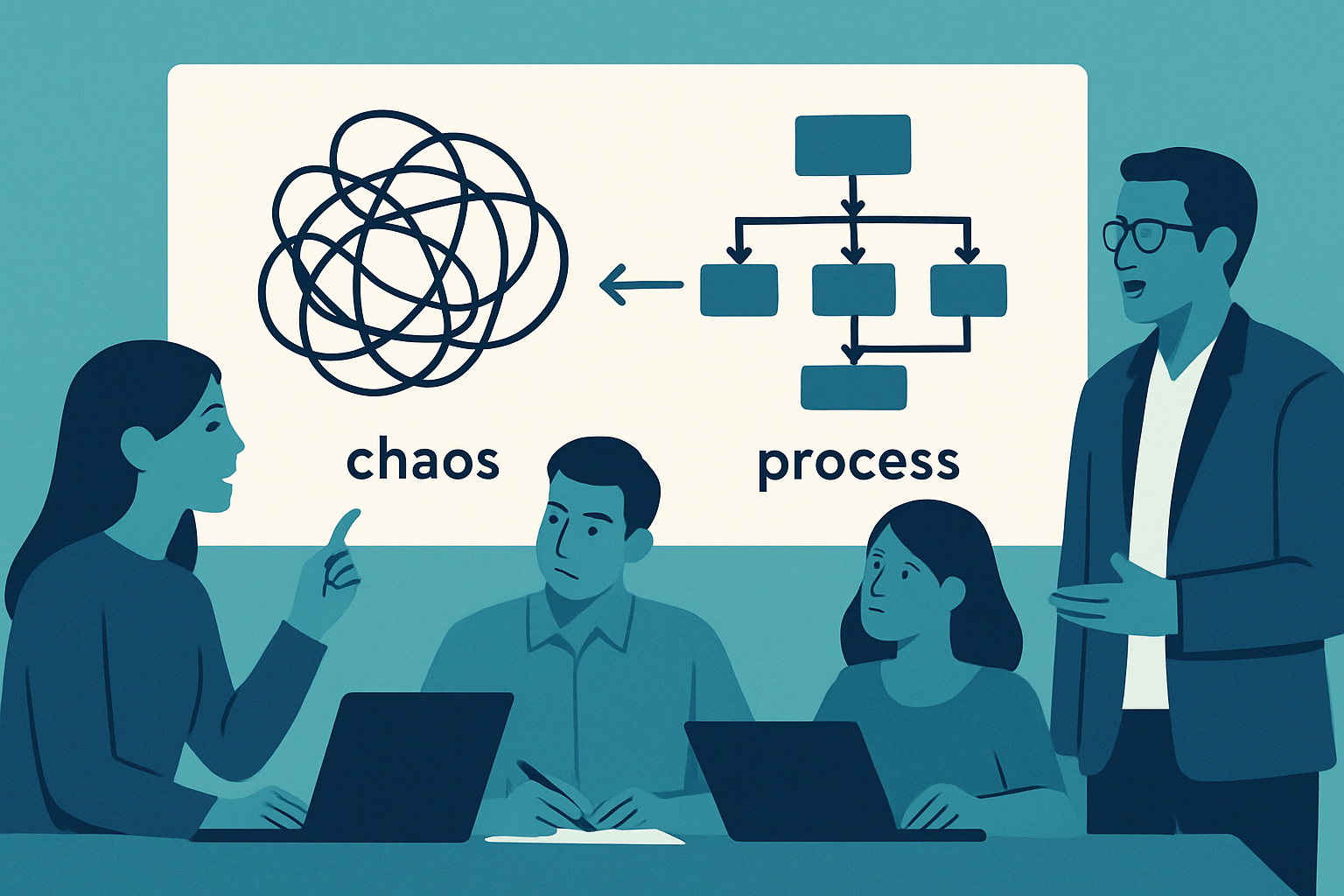
Every startup begins in controlled chaos. A small team moves fast, makes constant decisions, and works from shared instinct. There are no meetings to schedule because everyone already knows what’s happening. That early energy is powerful, but it doesn’t last forever.
As teams grow, the cracks start to show. Communication gets harder. Decisions take longer. Quality becomes inconsistent. At some point, leaders realize they need more structure. The question isn’t whether to add process, but when and how much.
At O’Side Systems, we’ve helped founders navigate that moment. The timing of structure can determine whether a company scales smoothly or slows itself down.
The Risk of Adding Process Too Early
In the early days, a lightweight approach works best. Everyone is close to the problem, and decisions are fast. Introducing too much process too soon can smother that momentum.
If you add layers of approval, documentation, or meetings before the team needs them, creativity drops. Engineers and designers lose their sense of ownership, and the company starts to feel corporate long before it needs to.
A good rule of thumb: if a process solves a problem you don’t yet have, it’s too early. Wait until the pain is real and repeatable before trying to systematize it.
The Risk of Waiting Too Long
On the other hand, waiting too long creates a different kind of chaos. What once felt like agility turns into confusion. Deadlines slip, priorities conflict, and people burn out.
Teams start asking the same questions repeatedly:
- Who decides this?
- Which task comes first?
- Where do we track progress?
When coordination problems appear more often than product problems, it’s time to add structure. The goal is not to eliminate speed but to make it sustainable.
Finding the Right Moment
You usually know it’s time to add process when communication stops scaling naturally. In a team of five, everyone talks daily. At ten, updates get missed. At twenty, assumptions multiply. That’s when leaders need to formalize habits that used to happen informally.
For example:
- Weekly planning replaces hallway chats.
- A simple design review replaces constant Slack feedback.
- Documentation replaces verbal explanations.
The right moment to add structure is when repetition appears. If you keep solving the same problem more than twice, it’s time to define how it should be solved.
What Good Process Looks Like
Healthy process does not feel like control. It feels like clarity. It should answer three questions for every team member:
- What are we trying to achieve?
- How do I know if I’m doing it well?
- How do I get help when I’m stuck?
If a process doesn’t make those answers easier, it’s not helping.
Good process has a few other traits:
- It’s lightweight. The best systems fit on one page.
- It’s flexible. Teams can adapt it as they learn.
- It’s transparent. Everyone understands why it exists.
- It’s temporary. Revisit and simplify as the team grows.
When to Resist Structure
Not every problem needs a process. Some need better communication or stronger leadership. Before adding another meeting or tool, ask a few questions:
- Is the issue caused by unclear priorities instead of missing structure?
- Are we overcorrecting for one failure?
- Would clearer ownership solve this faster?
Structure should support good judgment, not replace it. When every decision requires a form or a meeting, you’ve crossed the line from helpful to heavy.
The Manager’s Role in Scaling Process
As teams expand, managers act as translators between structure and execution. They ensure new processes serve the team, not the other way around.
That means:
- Explaining why each process exists.
- Collecting feedback from the team and adjusting quickly.
- Protecting autonomy where it still works.
- Simplifying whenever possible.
Managers who view process as a living system keep it useful. They remove steps that no longer serve a purpose and let their teams focus on what matters.
Structure as an Evolution, Not an Event
Introducing process should feel like tuning, not transformation. You don’t go from chaos to order overnight. You experiment, observe, and adjust.
Start small. Add a weekly sync where alignment is breaking down. Introduce a lightweight template where context is missing. Observe the impact, then refine. Over time, these small improvements build the foundation for scale.
The best teams treat process the same way they treat software; it’s iterative, measured, and open to change.
At O’Side Systems, we help founders and technical leaders build systems that grow at the same pace as their teams. The goal is structure that supports creativity, not one that replaces it.
If you are ready to bring more order to your growth without losing your team’s agility, contact us to see how we can help.